

Digestive Symptoms You Should Never Ignore:
When Is It Time for a Gastroscopy or Colonoscopy?
September 2026
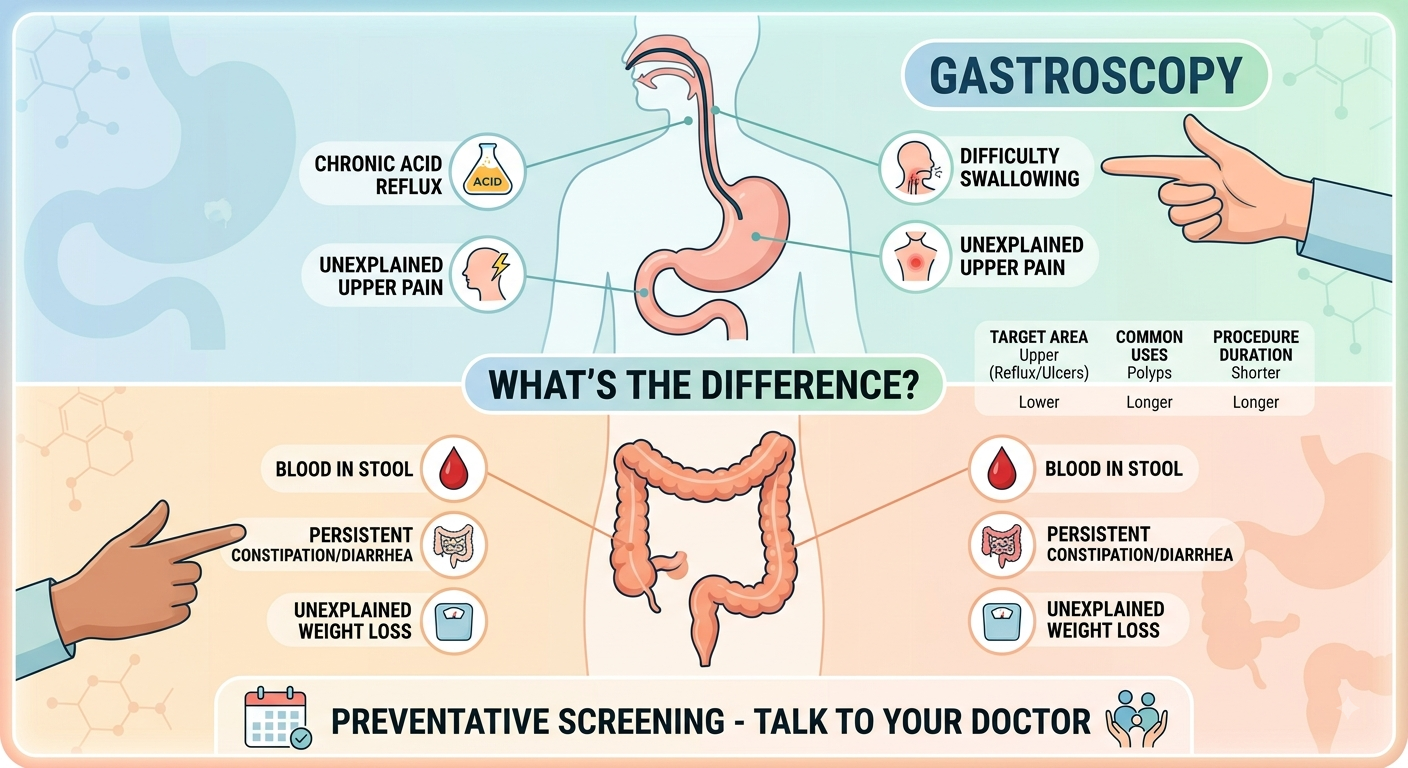
Digestive symptoms are common, but when they persist, become more frequent, or are accompanied by warning signs, they should not be ignored. Symptoms such as ongoing abdominal pain, persistent heartburn, changes in bowel habits, rectal bleeding, or unexplained weight loss may require further medical evaluation.
Two important procedures used to investigate digestive conditions are gastroscopy and colonoscopy. These examinations allow a specialist to look directly at different parts of the digestive tract, identify abnormalities, and, when necessary, take tissue samples for further analysis.
But how do you know when a digestive symptom requires more than routine treatment? And when might a gastroscopy or colonoscopy be recommended?
What Is a Gastroscopy?
A gastroscopy, also known as an upper gastrointestinal endoscopy (upper GI endoscopy), is a procedure used to examine the upper part of the digestive system.
During a gastroscopy, a thin, flexible tube with a small camera is passed through the mouth to examine the:
- Esophagus
- Stomach
- Duodenum
The procedure allows the doctor to identify inflammation, ulcers, bleeding, irritation, narrowing, and other abnormalities. A biopsy may also be taken during the examination if needed.
When Is a Gastroscopy Recommended?
A doctor may recommend a gastroscopy when certain digestive symptoms are persistent, unexplained, or associated with warning signs.
These may include:
- Persistent or severe heartburn and acid reflux
- Difficulty or pain when swallowing
- Persistent upper abdominal pain
- Recurrent nausea or vomiting
- Vomiting blood
- Black or tarry stools
- Unexplained weight loss
- Unexplained iron-deficiency anemia
- Suspected stomach or duodenal ulcers
- Persistent symptoms despite appropriate treatment
A gastroscopy can help investigate conditions such as gastritis, gastroesophageal reflux disease (GERD), peptic ulcers, esophagitis, and other upper gastrointestinal disorders.
What Is a Colonoscopy?
A colonoscopy is an endoscopic examination used to examine the inside of the rectum and colon (large intestine).
During the procedure, a flexible tube equipped with a camera is used to examine the lining of the colon. If necessary, the physician can take biopsies or remove certain polyps during the examination.
Colonoscopy is commonly used to investigate symptoms affecting the lower digestive tract and plays an important role in colorectal cancer screening.
When Is a Colonoscopy Recommended?
A physician may recommend a colonoscopy if you experience:
- Blood in the stool
- Rectal bleeding
- Persistent constipation or diarrhea
- A significant or unexplained change in bowel habits
- Persistent abdominal pain
- Unexplained weight loss
- Unexplained iron-deficiency anemia
- Changes in stool appearance
- A positive colorectal cancer screening test
- A personal or family history of colorectal polyps or colorectal cancer
The decision to undergo a colonoscopy depends on several factors, including your symptoms, age, medical history, family history, and individual risk factors.
Digestive Symptoms You Should Not Ignore
1. Persistent Heartburn or Acid Reflux
Occasional heartburn is common. However, frequent or persistent acid reflux may require medical evaluation, particularly when symptoms continue despite treatment.
Long-standing reflux symptoms can sometimes be associated with changes in the esophagus, making medical assessment important.
2. Persistent Abdominal Pain
Abdominal pain can have many possible causes. If pain is persistent, recurrent, unexplained, or progressively worsening, it is important to consult a doctor rather than repeatedly treating the symptom without identifying its cause.
Depending on the location and characteristics of the pain, your physician may recommend laboratory tests, imaging, gastroscopy, colonoscopy, or other investigations.
3. Blood in the Stool
Seeing blood in your stool or experiencing rectal bleeding should not automatically be attributed to hemorrhoids.
Depending on your age, symptoms, and medical history, your doctor may recommend further investigation, including a colonoscopy, to determine the underlying cause.
4. Unexplained Weight Loss
Losing weight without intentionally changing your diet or physical activity can have several possible causes.
When unexplained weight loss occurs alongside digestive symptoms, such as abdominal pain, changes in bowel habits, persistent vomiting, or difficulty swallowing, medical evaluation is particularly important.
5. Changes in Bowel Habits
A persistent change in your usual bowel habits should be discussed with a physician.
This may include:
- Ongoing constipation
- Persistent diarrhea
- Alternating constipation and diarrhea
- A noticeable change in stool pattern
- A persistent change in stool appearance
Not every change indicates a serious condition, but persistent or unexplained changes may require further investigation.
6. Difficulty Swallowing
Difficulty swallowing, also called dysphagia, can be associated with several conditions affecting the esophagus.
If swallowing becomes difficult or painful, particularly if the symptom is persistent or worsening, a physician may recommend an upper GI endoscopy to investigate the cause.
7. Unexplained Iron-Deficiency Anemia
Iron-deficiency anemia can sometimes be related to blood loss within the digestive tract.
When the cause of anemia is unclear, a doctor may recommend gastrointestinal investigations, which can include a gastroscopy, colonoscopy, or both, depending on the individual’s symptoms and clinical history.
Gastroscopy vs. Colonoscopy: What’s the Difference?
Although both procedures are types of gastrointestinal endoscopy, they examine different parts of the digestive system.
Gastroscopy | Colonoscopy |
Examines the upper digestive tract | Examines the lower digestive tract |
Esophagus, stomach and duodenum | Colon and rectum |
Often used for reflux, swallowing difficulties and upper abdominal symptoms | Often used for bowel changes and rectal bleeding |
Can identify ulcers, inflammation and other abnormalities | Can identify polyps, inflammation and other abnormalities |
Biopsies can be taken when needed | Biopsies can be taken and certain polyps may be removed |
Your physician will determine which examination is appropriate based on your symptoms, medical history, age, and risk factors.
Can Gastroscopy or Colonoscopy Detect Cancer?
Both procedures can play an important role in detecting abnormalities that may require further investigation.
During a gastroscopy, the physician can examine the upper digestive tract and take biopsies from suspicious or abnormal areas.
During a colonoscopy, the physician can identify abnormal tissue and certain polyps can be removed during the procedure. This is one of the reasons colonoscopy is an important tool in colorectal cancer screening and prevention.
However, having a digestive symptom does not automatically mean that you have cancer. Many digestive symptoms have benign and treatable causes. The purpose of appropriate testing is to identify the cause and ensure that significant conditions are not overlooked.
When Should You See a Doctor?
Consider speaking with a doctor if you experience digestive symptoms that are:
- Persistent or recurring
- Getting progressively worse
- Unexplained
- Affecting your daily life
- Accompanied by bleeding
- Associated with unexplained weight loss
- Accompanied by difficulty swallowing or persistent vomiting
- Associated with unexplained anemia
- Accompanied by a significant change in bowel habits
Early medical evaluation can help determine the cause of your symptoms and whether further diagnostic testing is necessary.
Don’t Ignore What Your Digestive System Is Telling You
Not every episode of bloating, heartburn, constipation, or abdominal discomfort requires an endoscopic examination. However, persistent or concerning digestive symptoms deserve proper medical attention.
A gastroscopy or colonoscopy may provide valuable information when your doctor believes that direct examination of the digestive tract is necessary.
Are you experiencing persistent digestive symptoms?
If you are experiencing ongoing digestive symptoms or have been advised to undergo a gastroscopy or colonoscopy, speak with your doctor about the appropriate diagnostic approach for your individual situation.
Your symptoms are worth understanding not simply managing.
Visit St. Marc for precious coloscopy or gastroscopy diagnosis!