

10 Silent Health Conditions a Routine Blood Test Can Detect Early
August 2026
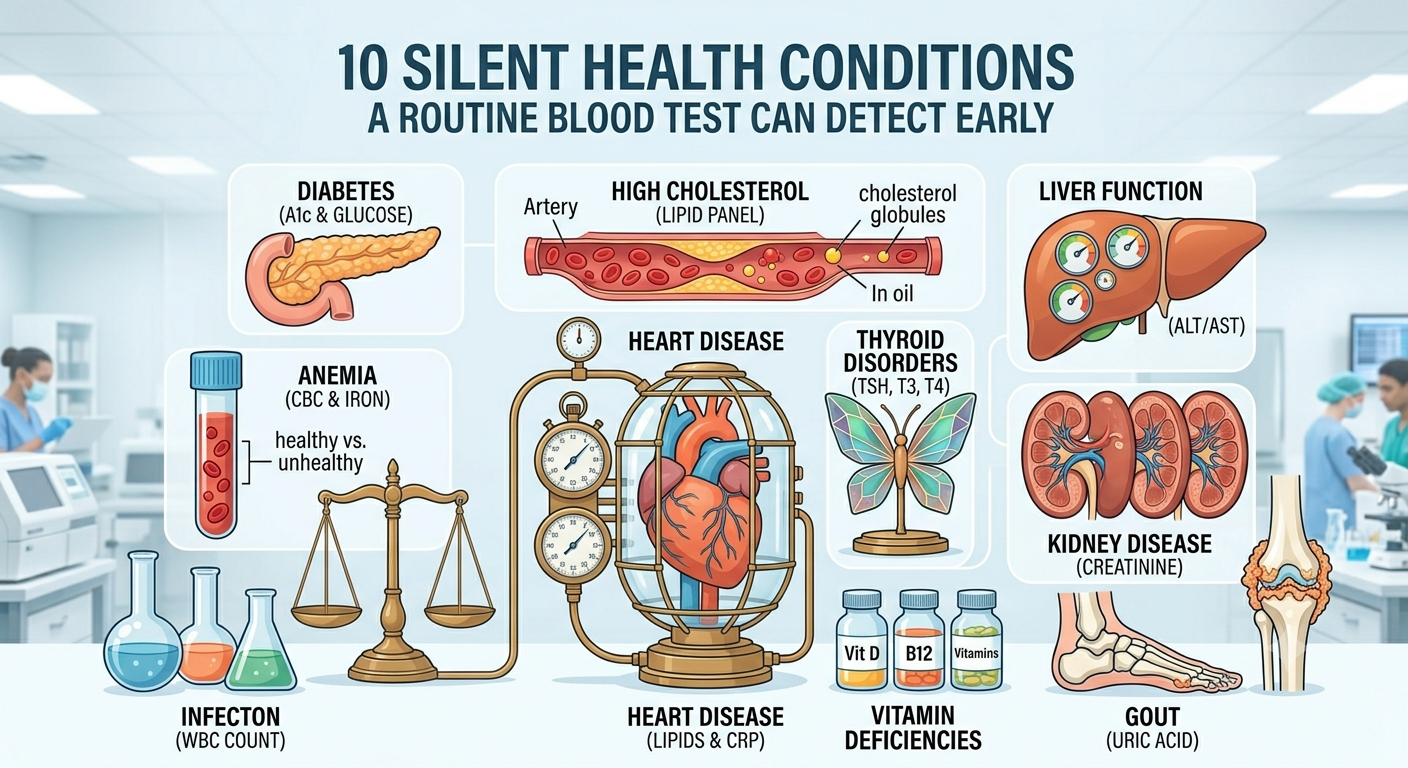
Many serious health conditions develop quietly, showing little to no symptoms until they become advanced. Fortunately, a routine blood test can reveal early warning signs long before noticeable symptoms appear, allowing for timely diagnosis and treatment.
At St. Marc Medical and Diagnostic Center, our advanced laboratory services provide accurate and reliable blood testing to help detect hidden medical conditions, monitor your overall health, and support preventive care.
Here are ten silent health conditions that a routine blood test can identify before they become serious.
1. Diabetes and Prediabetes
One of the most common conditions detected through blood testing is prediabetes or type 2 diabetes.
Tests such as:
- Fasting Blood Sugar (FBS)
- HbA1c
- Random Blood Sugar
Measure your blood glucose levels and indicate whether your body is processing sugar properly.
Why early detection matters?
Many people with prediabetes experience no symptoms. Detecting abnormal blood sugar early allows lifestyle changes and treatment that may prevent diabetes from developing.
2. High Cholesterol
High cholesterol rarely causes symptoms but significantly increases the risk of:
- Heart disease
- Heart attack
- Stroke
A Lipid Profile measures:
- Total Cholesterol
- LDL (Bad Cholesterol)
- HDL (Good Cholesterol)
- Triglycerides
Regular screening helps assess cardiovascular risk before complications occur.
3. Iron Deficiency and Anemia
Feeling constantly tired may not simply be stress.
A Complete Blood Count (CBC) together with Ferritin and Iron Studies can detect:
- Iron deficiency
- Anemia
- Reduced oxygen-carrying capacity
Early diagnosis helps restore energy levels while preventing complications.
4. Thyroid Disorders
The thyroid controls your metabolism, energy, heart rate, and body temperature.
Blood tests including:
- TSH
- Free T3
- Free T4
can identify:
- Hypothyroidism
- Hyperthyroidism
Many thyroid disorders develop gradually and often go unnoticed for years.
5. Vitamin Deficiencies
Vitamin deficiencies may contribute to:
- Fatigue
- Muscle weakness
- Poor concentration
- Mood changes
- Reduced immunity
Common laboratory tests evaluate:
- Vitamin D
- Vitamin B12
- Folate
Correcting deficiencies early improves overall health and quality of life.
6. Liver Disease
Your liver performs hundreds of essential functions, yet liver disease may progress without symptoms.
Routine blood tests assess liver health by measuring:
- ALT
- AST
- GGT
- Bilirubin
- Alkaline Phosphatase
Abnormal results may indicate inflammation, fatty liver disease, hepatitis, or other liver conditions requiring further evaluation.
7. Kidney Disease
Kidney disease often develops silently until significant damage has occurred.
Blood tests evaluate kidney function through:
- Creatinine
- Blood Urea Nitrogen (BUN)
- Estimated Glomerular Filtration Rate (eGFR)
Early detection supports better long-term kidney health and helps prevent disease progression.
8. Chronic Inflammation and Infection
Persistent inflammation may indicate underlying medical conditions.
Markers such as:
- C-Reactive Protein (CRP)
- Erythrocyte Sedimentation Rate (ESR)
- White Blood Cell Count (CBC)
Can help physicians detect infections, autoimmune diseases, or ongoing inflammatory processes.
9. Electrolyte and Mineral Imbalances
Even mild electrolyte abnormalities can affect multiple body systems.
Routine blood tests measure:
- Sodium
- Potassium
- Calcium
- Magnesium
- Chloride
Maintaining healthy electrolyte levels supports normal muscle function, heart rhythm, hydration, and nerve activity.
10. Certain Blood Disorders
A Complete Blood Count (CBC) provides valuable information about your blood cells and may detect:
- Abnormal white blood cells
- Low platelet counts
- Bone marrow disorders
- Certain blood cancers
- Clotting abnormalities
While additional investigations may be required, routine blood work often provides the first indication that further evaluation is needed.
Who Should Have Routine Blood Tests?
Regular blood testing is recommended for:
- Adults over 30 years old
- Individuals with a family history of diabetes, heart disease, or thyroid disorders
- People with high blood pressure
- Individuals who are overweight or obese
- Smokers
- Anyone experiencing unexplained fatigue, weight changes, dizziness, or persistent weakness
- Adults undergoing annual health check-ups
Your physician may recommend more frequent testing depending on your medical history and risk factors.
Why Choose St. Marc Medical and Diagnostic Center?
At St. Marc Medical and Diagnostic Center, our experienced laboratory team delivers accurate, timely, and dependable diagnostic testing using advanced laboratory technology.
We are committed to supporting physicians and patients with high-quality laboratory services that contribute to early diagnosis, disease monitoring, and informed medical decisions.
Whether you’re scheduling your annual check-up or investigating specific symptoms, routine blood testing is one of the simplest yet most valuable steps you can take for your health.
Final Thoughts
Many serious illnesses begin silently. A simple routine blood test can reveal important changes before symptoms develop, giving you the opportunity to seek medical advice and begin treatment early.
Investing a few minutes in preventive laboratory testing today can make a significant difference in protecting your long-term health.
Book your routine blood test at St. Marc Medical and Diagnostic Center and take a proactive step toward early detection and better well-being.